
Size Guide
Understanding Mylulusstore Sizing


Description
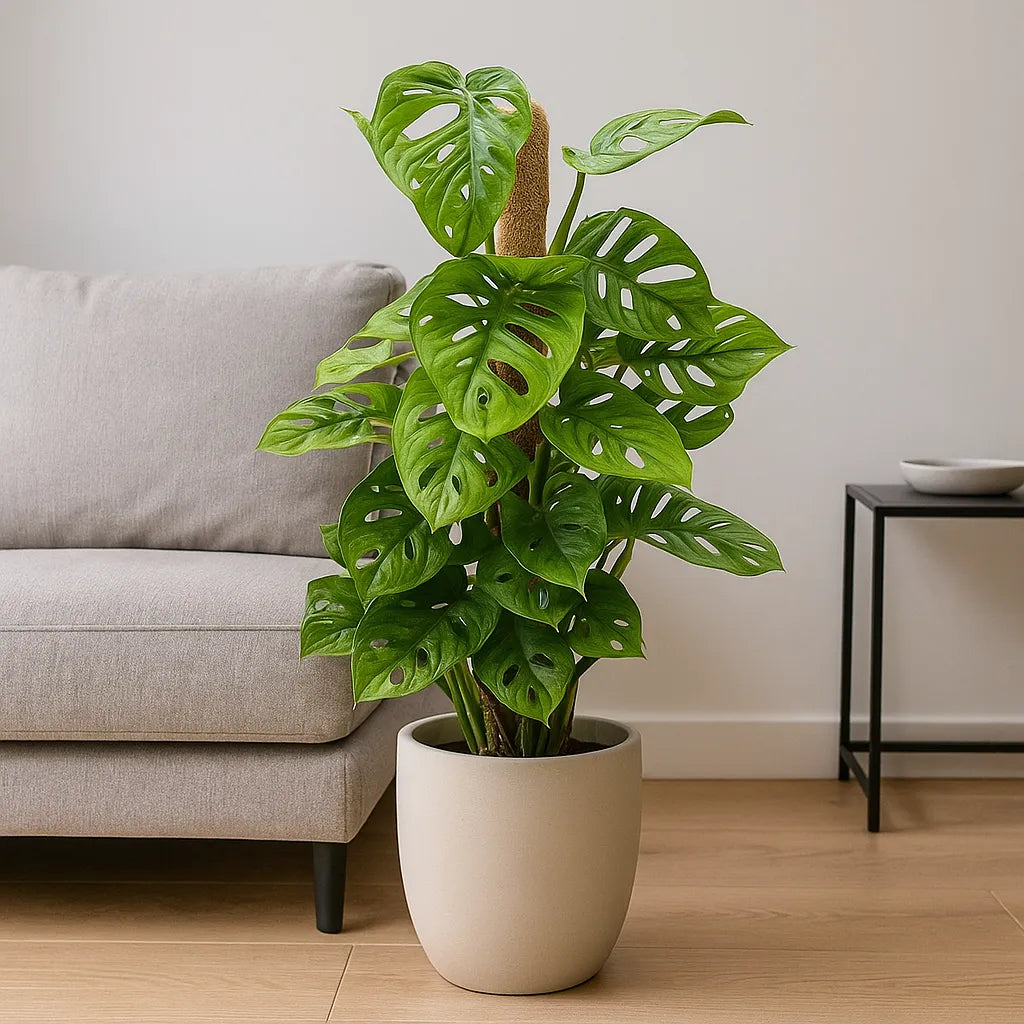
xMonstera adansonii, commonly known as the Swiss Cheese Vine, is a much-loved tropical climber admired for its unique, perforated leaves and easy-going nature. A member of the Araceae family and native to the rainforests of Central and South America, this species embodies the wild, untamed beauty of the jungle while remaining compact and manageable indoors.
Its heart-shaped leaves are deep green and adorned with natural oval-shaped holes (fenestrations), giving the plant its iconic “Swiss cheese” appearance. As the plant matures, the leaves become larger and more intricately perforated, creating a delicate yet dramatic texture. Monstera adansonii is both a climber and trailer, making it perfect for hanging baskets, tall shelves, or trained up a moss pole for a lush, vertical statement.
Lively, tropical, and wonderfully versatile, the Swiss Cheese Vine brings instant jungle charm to any home — a true favourite among plant enthusiasts and interior designers alike.
Monstera adansonii – Care Guide
Light
Thrives in bright, indirect light. Too much direct sunlight can scorch its delicate leaves, while too little light may slow growth and reduce leaf perforation. East- or north-facing windows are ideal, or filtered light through sheer curtains in brighter rooms.
Watering
Keep the soil lightly moist but never soggy. Water when the top 2–3 cm of soil feels dry. In winter, reduce watering slightly while maintaining gentle moisture. Always ensure good drainage to prevent root rot — Monstera adansonii prefers to dry out a little between waterings.
Temperature and Humidity
Temperature: Prefers warmth between 18–28 °C; avoid cold drafts and temperatures below 15 °C.
Humidity: High humidity (60–80%) encourages healthy growth and glossy foliage. Mist regularly, use a humidifier, or group with other tropical plants to create a humid environment.
Soil and Potting
Use a rich, airy, and well-draining mix — compost combined with perlite, orchid bark, and coco coir works perfectly. This mimics its natural epiphytic conditions, providing aeration while retaining gentle moisture. Repot every 1–2 years in spring to refresh nutrients and promote strong root growth.
Feeding
Feed every 4–6 weeks in spring and summer with a diluted, balanced liquid fertiliser. Avoid over-fertilising, which can cause leaf burn or salt build-up. Suspend feeding in autumn and winter.
Pruning and Maintenance
Prune to control length and encourage bushier growth. Cuttings root easily in water or moist soil, making propagation simple. Wipe the leaves occasionally with a soft, damp cloth to remove dust and enhance their natural gloss. Rotate the plant occasionally for even light exposure and balanced growth.
Growth and Maturity
A moderately fast grower, Monstera adansonii can reach 1.5–2 metres indoors when supported. Its vining habit allows it to climb or trail, producing larger and more fenestrated leaves as it matures. With the right care, it develops into a lush, cascading feature that instantly transforms interiors.
Common Issues
-
Yellow leaves: Overwatering or poor drainage.
-
Brown edges: Low humidity or inconsistent watering.
-
Sparse growth: Insufficient light.
-
Pests: Occasionally affected by thrips or spider mites — treat with neem oil and maintain humidity.
Background and Benefits
Native to the humid tropical forests of Central and South America, Monstera adansonii grows as an epiphyte, climbing trees in search of dappled light and absorbing moisture from the air. Its natural fenestrations allow wind and light to pass through the leaves in the dense rainforest canopy — an adaptation that also makes it highly decorative in indoor spaces.
Like other Monsteras, it’s an excellent natural air purifier, filtering toxins and improving indoor air quality. Symbolically, its perforated leaves represent adaptability and growth — a reminder of resilience and flexibility in changing environments.
Quick Care Summary
-
Light: Bright, indirect light; avoid harsh direct sun
-
Water: Keep soil lightly moist; allow top few cm to dry
-
Temperature: 18–28 °C; avoid below 15 °C
-
Humidity: High (60–80%)
-
Soil: Aroid mix – compost, perlite, orchid bark, coco coir
-
Feed: Every 4–6 weeks in spring/summer
-
Growth: 1.5–2 m trailing or climbing vine; perforated green leaves
⚠️ Toxicity note: Toxic to pets and humans if ingested; may cause mild mouth and skin irritation.
Styling Tip
Showcase Monstera adansonii in a hanging planter, trailing elegantly from a high shelf, or train it up a moss pole for a structured, vertical look. Its distinctive leaves add texture and movement to any room, pairing beautifully with other tropical favourites like Philodendron ‘Brasil’, Epipremnum ‘Marble Queen’, or Ficus ‘Altissima’. Perfect for bright living spaces, bedrooms, or conservatories, the Swiss Cheese Vine brings a lush, jungle-inspired atmosphere wherever it grows.


- Choosing a selection results in a full page refresh.