
Size Guide
Understanding Mylulusstore Sizing


Description
xHistorical Context of Count Eudes and the Siege of Paris in 886
The Rise of the Normans: A Threat to Medieval France
In the late 9th century, the Normans emerged as a formidable force in Europe. Their raids along the Seine River posed a significant threat to the heart of France, particularly Paris. The Viking warriors, known for their naval prowess and fierce combat skills, sought to expand their territory and wealth. This period marked a time of chaos and uncertainty, as towns and cities braced for attacks that could devastate their communities.
Count Eudes: The Heroic Leader of Paris
Background of Count Eudes: Noble Lineage and Military Prowess
Count Eudes, a nobleman of distinguished lineage, rose to prominence as a military leader during this turbulent time. Born into a family with deep roots in the French aristocracy, Eudes was not only a skilled warrior but also a strategic thinker. His leadership during the siege of Paris in 886 showcased his bravery and commitment to protecting his homeland.
The Significance of the Year 886 in French History
The year 886 stands out in French history as a pivotal moment. It was during this year that Count Eudes led the defense of Paris against the relentless Norman siege. This event not only tested the mettle of the city's defenders but also solidified Eudes' legacy as a national hero. The successful defense of Paris became a symbol of resilience and unity for the French people.
Artistic Analysis of Count Eudes Defends Paris Against the Normans
Jean Victor Schnetz: The Visionary Behind the Canvas
Biographical Insights into Jean Victor Schnetz
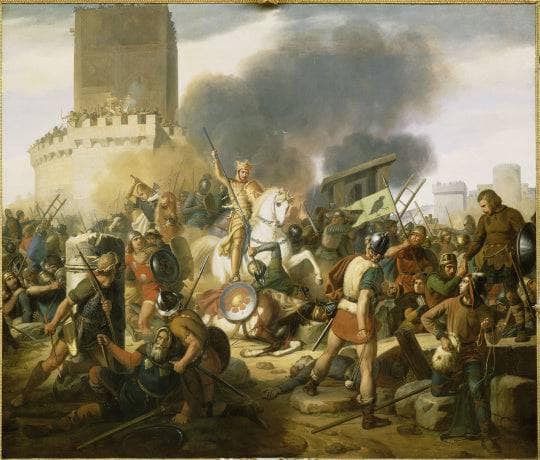
Jean Victor Schnetz, a prominent French painter of the 19th century, is celebrated for his historical and romantic works. Born in 1787, Schnetz was influenced by the neoclassical style but later embraced Romanticism. His passion for history and storytelling is evident in his painting "Count Eudes Defends Paris Against the Normans," where he captures a defining moment in French history.
Artistic Style: Romanticism and Historical Painting
Schnetz's artistic style reflects the Romantic movement, characterized by emotional depth and dramatic narratives. His historical paintings often depict heroic figures and significant events, aiming to evoke a sense of national pride. In "Count Eudes Defends Paris Against the Normans," Schnetz masterfully combines historical accuracy with artistic flair, creating a powerful visual narrative.
Composition and Color Palette: A Study of Visual Elements
Dynamic Movement and Dramatic Lighting Techniques
The composition of Schnetz's painting is dynamic, drawing the viewer's eye into the action. The use of dramatic lighting highlights Count Eudes and his valiant soldiers, emphasizing their courage in the face of adversity. The swirling clouds and tumultuous sky add to the sense of urgency and chaos, immersing the audience in the historical moment.
Symbolism in Color Choices: Red, Blue, and Gold
Schnetz's color palette is rich with symbolism. The bold reds signify valor and sacrifice, while the deep blues evoke loyalty and steadfastness. Gold accents represent glory and triumph, reflecting the nobility of Count Eudes and his cause. These colors work together to create a visually striking and emotionally resonant piece.
Thematic Exploration: Valor, Sacrifice, and National Identity
Depiction of Heroism in Schnetz's Work
Count Eudes as a Symbol of Resistance
In Schnetz's painting, Count Eudes emerges as a powerful symbol of resistance against oppression. His determined expression and commanding presence inspire viewers, reminding them of the importance of courage in the face of overwhelming odds. Eudes embodies the spirit of the French people, rallying them to defend their homeland.
Representation of the Common People in the Face of Adversity
The painting also highlights the role of common soldiers and citizens in the defense of Paris. Schnetz portrays these figures with dignity, showcasing their bravery and commitment to their city. This representation emphasizes the collective effort required to withstand the Norman siege, reinforcing the theme of unity in adversity.
National Identity and the Legacy of the Siege
How the Painting Reflects French Nationalism
"Count Eudes Defends Paris Against the Normans" serves as a powerful reflection of French nationalism. The painting captures a moment when the French people united against a common enemy, fostering a sense of national pride. Schnetz's work resonates with viewers, reminding them of their shared history and identity.
The Influence of Historical Events on French Art
Historical events like the siege of Paris have profoundly influenced French art. Artists like Schnetz sought to immortalize these moments, creating works that inspire future generations. The painting not only serves as a historical record but also as a source of inspiration for those who value courage and resilience.
Comparative Analysis: Count Eudes and Other Historical Paintings
Similarities with Other Romantic Historical Works
Schnetz's painting shares similarities with other Romantic historical works, characterized by their dramatic narratives and emotional depth. Artists of this era often depicted heroic figures and significant events, aiming to evoke a sense of pride and connection to the past. "Count Eudes Defends Paris Against the Normans" stands out for its unique portrayal of a lesser-known yet crucial moment in French history.
Contrasting Themes in Paintings of the Same Era
While many Romantic paintings focus on individual heroism, Schnetz's work emphasizes collective action. The unity of the defenders of Paris contrasts with other works that may highlight solitary figures. This approach enriches the narrative, showcasing the importance of community in overcoming challenges.
Influence of Schnetz on Future Generations of Artists
Legacy of Historical Painting in French Art
Jean Victor Schnetz's contributions to historical painting have left a lasting legacy in French art. His ability to blend historical accuracy with emotional storytelling has inspired countless artists. The themes of valor and national identity in his work continue to resonate, influencing the direction of historical painting in France and beyond.
FAQs About Count Eudes Defends Paris Against the Normans
What is the historical significance of the painting?
The painting captures a crucial moment in 886 when Count Eudes defended Paris against the Normans, symbolizing French resilience and unity.
Who was Count Eudes and why is he important?
Count Eudes was a noble military leader known for his defense of Paris during the Norman siege, becoming a national hero in French history.
What artistic techniques did Jean Victor Schnetz use?
Schnetz employed dynamic composition, dramatic lighting, and a rich color palette to convey emotion and action in his painting.
How does this painting reflect the values of its time?
The painting reflects the values of bravery, sacrifice, and national pride that were significant during the turbulent times of the 9th century.
What are the main themes depicted in the artwork?
The main themes include heroism, collective resistance, and the importance of national identity in the face of adversity.
How does this painting compare to other historical artworks?
This painting stands out for its focus on collective action and community, contrasting with other works that emphasize individual heroism.
What should I know about the reproduction of this painting?
Art reproductions of "Count Eudes Defends Paris Against the Normans" offer a superior alternative to prints, capturing the intricate details and vibrant colors of the original artwork.
Are there different styles of reproductions available?
Yes, reproductions come in various styles, including canvas and framed options, allowing you to choose the best fit for your space.
How can I ensure the quality of the reproduction?
To ensure quality, look for reproductions created by skilled artisans who use high-quality materials and techniques to replicate the original painting's essence.
- Choosing a selection results in a full page refresh.