
Size Guide
Understanding Mylulusstore Sizing


Description
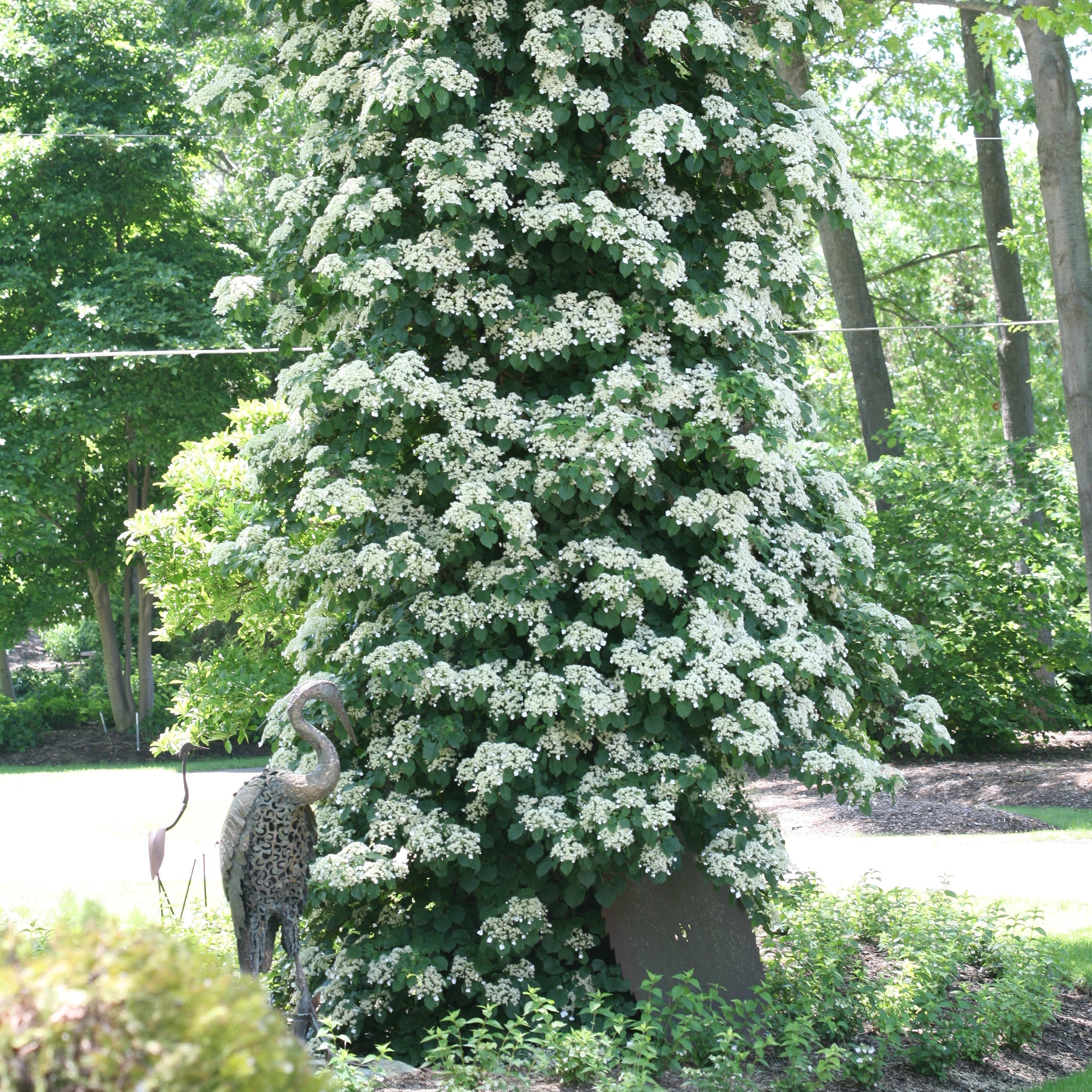
xEver wish you could cover everything with flowers? When you plant a climbing hydrangea, that's what happens! Unlike all of its hydrangea cousins, climbing hydrangea naturally grows as a vine which produces small rootlets that help it cling. In nature, it would clamor up trees and shrubs, and it's still lovely that way in gardens, though its equally useful grown on walls, chimneys, fences, pergolas, and other structures.
Climbing hydrangeas take a few years to get established before they begin to flower, but once they're settled in and growing vigorously, they provide years of beauty, growing more dramatic and floriferous each season.
Details:
Name: Hydrangea anomala subsp. petiolaris
Hardiness: USDA zones 4-9
Height + width: 10-30' tall x 1- - 20' wide (taller/wider in milder climates, shorter in areas with long cold winters)
Light: Full to part sun
Soil: Any well-drained soil will do.
Pruning: Blooms on old wood. Pruning is rarely needed, though climbing hydrangeas may be selectively pruned to fill a specific space or to improve the habit. Climbing hydrangeas bloom on old wood, so trimming/cutting back will remove flower buds.
Water: Average water needs. Does not tolerate wet conditions.
Fertilizer: Fertilize once in early spring with a rose fertilizer if desired.
Bloom time: Early summer
Bloom color: White, aging to green.
Uses: Climbing hydrangeas must be grown on a structure, but almost anything will do. Growing up the trunks of trees is one of the most classic ways to enjoy them, but they cling equally well to man-made structures. Climbing hydrangea is unlikely to harm the trees they grow on or masonry, however, if you remove the plant, their dried old rootlets will cling to the surface for several years unless scrubbed off.


- Choosing a selection results in a full page refresh.