
Size Guide
Understanding Mylulusstore Sizing


Description
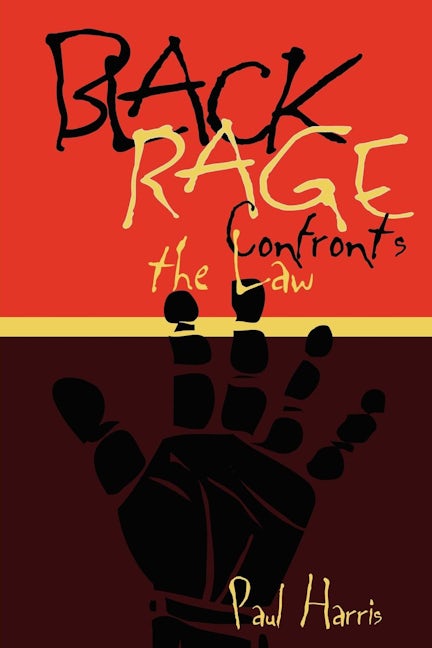
xTraces the origins of the black rage defense in criminal court history
In 1971, Paul Harris pioneered the modern version of the black rage defense when he successfully defended a young black man charged with armed bank robbery. Dubbed one of the most novel criminal defenses in American history by Vanity Fair, the black rage defense is enormously controversial, frequently dismissed as irresponsible, nothing less than a harbinger of anarchy. Consider the firestorm of protest that resulted when the defense for Colin Ferguson, the gunman who murdered numerous passengers on a New York commuter train, claimed it was considering a black rage defense.
In this thought-provoking book, Harris traces the origins of the black rage defense back through American history, recreating numerous dramatic trials along the way. For example, he recounts in vivid detail how Clarence Darrow, defense attorney in the famous Scopes Monkey trial, first introduced the notion of an environmental hardship defense in 1925 while defending a black family who shot into a drunken white mob that had encircled their home.
Emphasizing that the black rage defense must be enlisted responsibly and selectively, Harris skillfully distinguishes between applying an environmental defense and simply blaming society, in the abstract, for individual crimes. If Ferguson had invoked such a defense, in Harris's words, it would have sent a superficial, wrong-headed, blame-everything-on-racism message. Careful not to succumb to easy generalizations, Harris also addresses the possibilities of a white rage defense and the more recent phenomenon of cultural defenses. He illustrates how a person's environment can, and does, affect his or her life and actions, how even the most rational person can become criminally deranged, when bludgeoned into hopelessness by exploitation, racism, and relentless poverty.
- Choosing a selection results in a full page refresh.