
Size Guide
Understanding Mylulusstore Sizing


Description
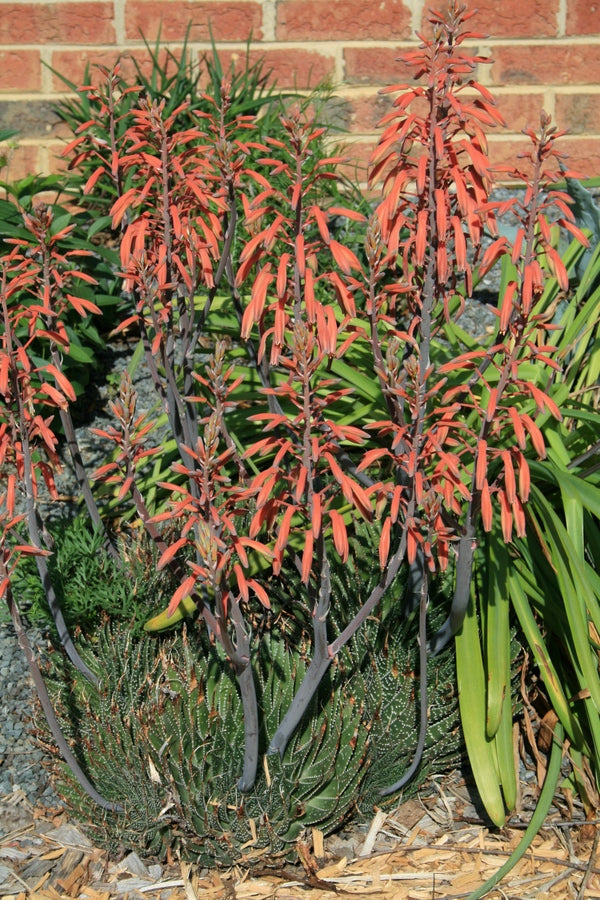
x(aka: Aristaloe aristata) We had already grown Aloe aristata for several years outdoors before I was fortunate to spot it in the wild on my 2005 South African expedition at nearly 9,000' elevation. Here, it grew wedged in the rocks on a nearly sheer cliff face. In cold climates, do not plant it out in the open where rains can soak it during the winter months. Planting it near a hedge or large shrub where it can still get afternoon sun is perfect. The 9-year-old clump in our rock garden is now 6" tall x 15" wide, composed of haworthia-like rosettes of stiff green leaves. The clumps are topped in May with 2' tall spikes of attractive, orange, bell-like flowers. It is not tolerant of winter moisture when temperatures drop below 20 degrees F.
Maintenance:
Aloe aristata requires no maintenance in the garden as long as it's growing in the proper conditions.
Growing Conditions:
As mentioned above, it is essential that the rosettes be dry in the winter when grown in climates that drop below freezing in winter.
Garden Value:
Use bristle-tip aloe as you would a sempervivum or other similar succulent in a rock garden setting. It is not plant for the open garden where it could easily be overrun by more aggressive perennials.

- Choosing a selection results in a full page refresh.