
Size Guide
Understanding Mylulusstore Sizing


Description
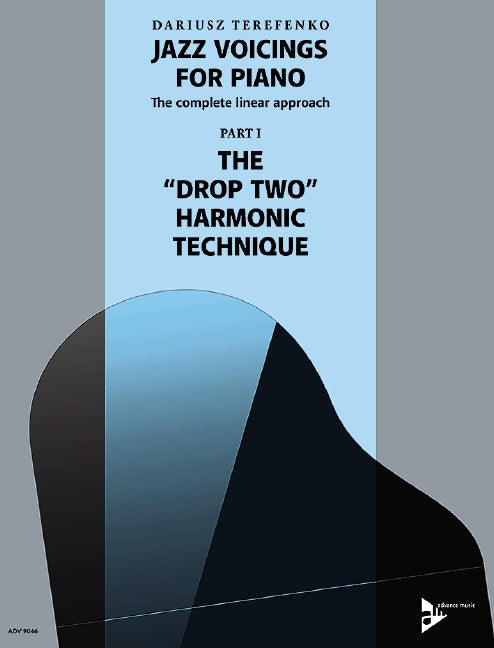
xJazz Voicings: The Complete Linear Approach is designed for jazz pianists seeking to broaden their knowledge of jazz harmony and to cultivate practical skills for mastering the harmonic progressions found in standard tunes and jazz instrumentals. Created for amateur or professional jazz pianists, this path takes you step-by-step through all essential aspects of the linear approach.Part 1: The “Drop-Two” Harmonic Technique begins with the simple process of dropping the second note from a close position chord down an octave to create an open position voicing. Making an analogy between language and music, natural languages contain a lexicon of words that allow people to communicate their thoughts and feelings to others, music (jazz) harmony contains a lexicon of chords that allow jazz musicians to communicate. Part 1 defines these rules and clearly explains how with a distinctive approach to voice leading, dissonances treatment, and counterpoint, which are logical extensions of the syntax of jazz harmony. The chapters are: “Four-Part Chords,” “Inverted Chords,” “Five-Part Chords,” “Rootless Chords,” and finishing with “Six-Part Chords” and “Incomplete Chords.” The concluding Exercise Section contains carefully-designed harmonic drills that utilize and complement the content of each chapter in unique and interesting ways.
Chapter 1 – Four-Part Chords: Major Chords - Minor Chords - Dominant Chords - Half-Diminished / Diminished Chords - Drop Two Technique - Piano Textures - Voice Leading - Exploring the Potential of Drop Two Voicings - Exercise Section - Chapter 2 – Inverted Four-Part Chords: Preliminaries - Chromaticism - Invertible Counterpoint - Exercise Section - Chapter 3 – Five-Part Chords: Major Chords - Minor Chords - Diminished Chords - Dominant Chords - Suspended Chords - Keyboard Style - Chorale Style - Inverted Five-Part Chords - Exercise Section - Chapter 4 – Rootless Five-Part Voicings: Practicing Rootless Chords - The ii-V7-I Progression in Keyboard Style - The Sus7 Dominant Preparation - The iiø-V7-i Progression in Keyboard Style - Basic Melodic Elaborations in Chorale Style - Exercise Section - Chapter 5 – Six-Part Chords: Pairs of Triads - Superimposed Triads - Rootless Voicings - Upper-Structure Triads in the Dominant 7th Chord - Combinations of Extensions - Drop Two Dominant 7ths - Suspended Chords - Rootless Dominant 7th and Sus7 Chords - Voice Leading - Exercise Section - Chapter 6 – Incomplete Chords: J. S. Bach's Setting of a Chorale - Major, Minor and Half-Diminished / Diminished Chords in Chorale Style - Dominant 7th and Suspended Chords in Chorale Style - Rootless Formations in Chorale Style - The II-V-I Progression - Invertible Counterpoint - Linear Embellishments - Exercise Section - Index
- Choosing a selection results in a full page refresh.